Two Crises, One Solution: How Group Walks Are Quietly Healing Hunger and Loneliness at the Same Time
When Two Crises Collide
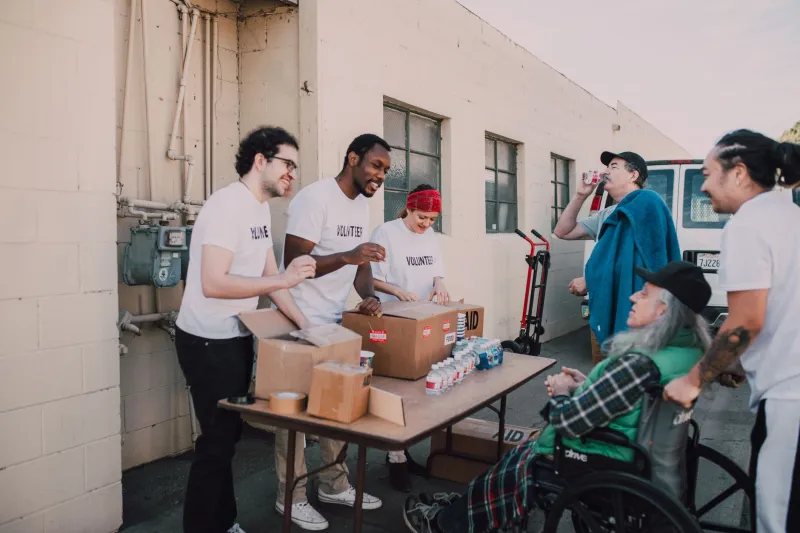
Picture two maps of the United States laid on top of each other. One shows counties with the highest rates of food insecurity. The other tracks communities reporting severe social isolation. Overlay them, and the overlap is striking — almost eerie.
This isn't a coincidence. Researchers, community health workers, and hunger advocates have been watching this pattern tighten for years. Food insecurity doesn't just empty refrigerators. It empties rooms. It pulls people away from social gatherings, from church potlucks, from birthday parties where they might have to explain why they're not eating much. And loneliness, in turn, makes hunger worse — because isolated people are less likely to seek help, less likely to connect with food pantries or community meal programs, and more likely to fall through the cracks entirely.
But here's the thing nobody talks about enough: a well-organized group fundraising walk — the kind that raises money for local meal programs — quietly addresses both problems at once. And the people who run these events are starting to understand just how powerful that dual impact really is.
The Loneliness Numbers Are Alarming
In 2023, U.S. Surgeon General Dr. Vivek Murthy declared loneliness a full-blown public health epidemic, noting that roughly half of American adults report measurable levels of social isolation. The health consequences are staggering — chronic loneliness carries risks comparable to smoking 15 cigarettes a day, increasing the likelihood of depression, cardiovascular disease, and cognitive decline.
At the same time, the USDA estimates that over 44 million Americans — including 13 million children — live in food-insecure households. These aren't abstract statistics. They're neighbors, coworkers, and family members quietly rationing meals and skipping grocery runs because the math just doesn't work out.
Dr. Priya Anand, a clinical psychologist based in Chicago who works with low-income families, has seen both crises play out in her practice. "The shame attached to hunger is enormous," she says. "My clients often describe feeling completely cut off — from friends, from community, from any sense of belonging. And that isolation makes it so much harder to reach out for food assistance, even when it's available."
The connection, she explains, runs both ways. People experiencing depression and loneliness are significantly more likely to struggle with consistent meal access. And hunger itself triggers anxiety and hopelessness that deepen social withdrawal. It's a feedback loop that's genuinely hard to break from the inside.
Why Walking Together Changes Something Real
This is where community-based charity walks do something quietly remarkable.
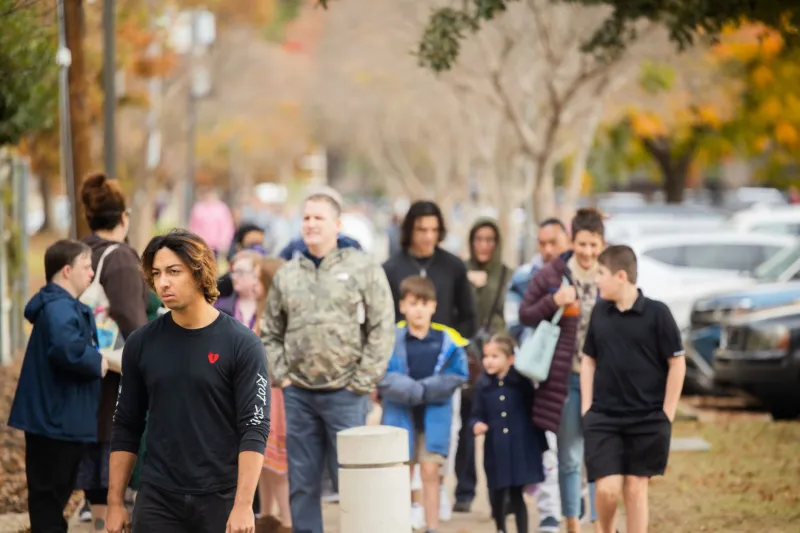
On the surface, a fundraising walk looks simple — people register, collect pledges, show up on a Saturday morning, and walk a few miles together. But the mechanics underneath that experience are doing a lot of heavy lifting.
For starters, there's accountability. When you sign up for a walk with a coworker, a neighbor, or a friend from your fitness app, you've made a social commitment. You're expected somewhere. Someone is counting on you to show up. For people dealing with depression or isolation, that kind of low-stakes accountability can be the difference between staying home and getting outside.
"Group exercise is one of the most underutilized mental health interventions we have," says Marcus Webb, a licensed counselor in Atlanta who volunteers with several community wellness organizations. "The research on this is pretty clear — exercising with other people produces more significant reductions in depression and anxiety than exercising alone, even when the physical exertion is identical. The social element is doing real work."
And charity walks have something that a regular group jog doesn't: shared purpose. Participants aren't just moving their bodies together. They're moving toward something — a goal, a cause, a concrete impact on their community. That sense of meaning amplifies the mental health benefit considerably.
From Walkers to Community Members
What happens after the walk is just as important as the walk itself.
Organizations that host recurring fundraising walks — events that happen annually or seasonally in the same neighborhoods — report something interesting: participants come back. They bring friends. They join planning committees. They start volunteering at the food banks their donations support. A one-time walk becomes an entry point into a community they didn't know they were missing.
Sarah Delgado, a hunger advocacy coordinator in Phoenix, has watched this transformation happen dozens of times. "We have walkers who showed up alone the first year, clearly nervous, not knowing anyone," she says. "Three years later, they're team captains. They're recruiting their whole office. They've made real friends through this thing. The walk gave them a reason to show up, and the community kept them coming back."
For participants who are themselves experiencing food insecurity — and yes, they walk too, because hunger doesn't have a look — the experience carries an added layer of meaning. Contributing to a solution, even while personally struggling, can shift the psychological experience of hardship in meaningful ways. It replaces helplessness with agency.
The Corporate Angle Nobody's Fully Exploiting Yet
Companies investing in employee wellness programs should be paying close attention to this intersection. Loneliness at work is a documented productivity and retention issue — Gallup research consistently links low workplace belonging to higher turnover and disengagement. And employees who feel disconnected from their community outside of work bring that disconnection into the office.
Organizing a company team for a hunger-focused charity walk hits multiple targets simultaneously. It builds internal camaraderie. It connects employees to a cause larger than quarterly targets. It gets people moving, which has documented benefits for focus and mood. And it generates real, measurable impact for food-insecure families in the communities where your employees actually live.
That's not a bad return on a Saturday morning.
Every Step Is Doing More Than You Think
When you register for a group walk — whether it's with your neighborhood association, your faith community, your company, or a team of friends you met online — you're participating in something that operates on multiple levels at once.
Your feet are raising money for meal programs. Your presence is telling someone else that they're not walking alone. Your commitment to show up is practicing the exact kind of social connection that both you and your community desperately need more of.
The loneliness epidemic and the hunger crisis are deeply, stubbornly linked. But so are their solutions. And one of the simplest, most accessible solutions available is a pair of decent walking shoes and a reason to show up for each other.
Every step feeds hope. And it turns out, every step feeds something else too — the quiet, essential human need to belong.