The Miles That Never Make the Feed: When Walking to Eat Is Not a Fitness Choice
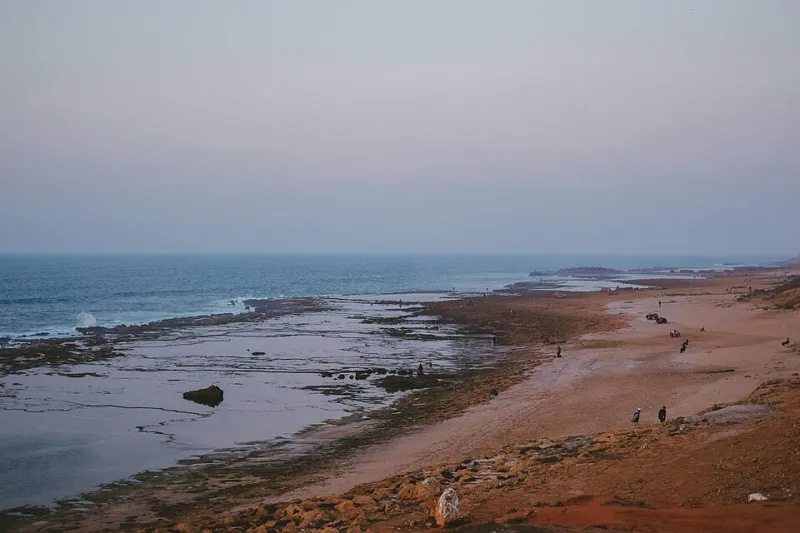
Photo: Bonosag3, CC0, via Wikimedia Commons
Denise doesn't post her walks on Instagram. There's no app tracking her route, no playlist curated for the occasion, no friend group waiting at the finish line with coffee. Most mornings, she pulls on the same pair of worn sneakers and walks two and a half miles to the food pantry on the other side of town — the one that's open on weekdays before noon, if you can get there in time to be near the front of the line.
She's 58, lives alone in a one-bedroom apartment in Memphis, and hasn't owned a car since 2019. The walk takes her about 45 minutes each way. She does it twice a week.
"People see me walking and think I'm out for exercise," she says. "I just smile. It's easier."
The Walk Nobody Celebrates
In the United States, walking has been rebranded as a wellness activity. Fitness trackers reward you for hitting 10,000 steps. Podcasts coach you through "mindful walks." Charity events raise millions by turning movement into a feel-good community experience — and there is genuine good in all of that.
But there is another kind of walking happening in this country that rarely gets a hashtag or a sponsorship banner. It's the walk a father in rural Georgia takes to the church food giveaway, three miles down a highway with no sidewalk, his kids trailing behind him. It's the elderly woman in South Side Chicago who catches two buses and walks six blocks to reach the nearest grocery store that accepts SNAP benefits. It's the college student in Albuquerque who skips a meal on the days she can't make the trip to the campus food pantry in time.
For these Americans, the question isn't how to make their steps count toward a fitness goal. The question is whether their steps will get them fed.
A Crisis Measured in Miles, Not Metrics
Food insecurity affects more than 44 million Americans, according to the USDA's most recent data — including roughly 13 million children. In low-income and rural communities, the problem is compounded by what researchers call "transportation food insecurity": the inability to reliably access food because of distance, lack of a vehicle, or inadequate public transit.
A 2022 study published in the American Journal of Preventive Medicine found that transportation barriers were among the most significant predictors of food insecurity for low-income adults — more significant, in some populations, than income alone. People who couldn't reliably get to food sources were more likely to skip meals, more likely to rely on nutritionally poor options at nearby convenience stores, and more likely to experience diet-related health complications.
The miles between a hungry family and a food resource aren't abstract. They're measured in blisters, in bus schedules, in the exhaustion of a body that's already running low.
Marcus's Story: Three Miles Before Sunrise
Marcus is 34 and lives in a mid-sized city in Ohio. He works part-time at a warehouse and picks up odd jobs when he can. His neighborhood — technically classified as a food desert by federal standards — has one convenience store and a dollar store. The nearest full-service grocery is 3.2 miles away.
"I do the walk early," he says, "before it gets hot, before my shift. I carry a backpack. I can usually get enough for a few days if I plan right."
He estimates he walks six to eight miles a week just to source food. He's never thought of it as exercise. "It's just what you do," he says, with a shrug that carries more resignation than complaint.
When asked what he thinks about charity walks — the organized fundraising events that raise awareness about hunger — he pauses. "I think it's good," he says carefully. "I just hope the people walking know what they're walking about."
The Walkers Who Walk in Their Honor
Jamila has done the Walk to End Hunger event in her city for three years running. She started because a coworker asked her to join a team. She kept coming back because something shifted in her the first year — something she still finds hard to articulate.
"I went in thinking it was a nice thing to do, a fun Saturday," she says. "And then I started reading about what food insecurity actually looks like — not the statistics, but the stories. The people who are already walking miles just to eat. And I thought, the least I can do is walk a few miles and make sure my steps mean something."
Jamila now helps organize her company's team for the walk every fall. She's raised over $6,000 in three years. She also volunteers at a food bank twice a month — something she says she never would have done if she hadn't started walking.
"The walk changed how I see things," she says. "I drive past the food pantry near my office every day now, and I notice the line outside. I used to not even see it."
The Uncomfortable Irony — and Why It Matters
There is an irony at the heart of hunger-focused charity walks that deserves to be named rather than glossed over. On one side: people with enough resources and leisure time to choose to walk, to fundraise, to turn movement into meaning. On the other: people for whom walking to find food is a burden they didn't choose and can't opt out of.
Acknowledging that gap isn't a reason to stop walking. It's a reason to walk with more intention.
The most powerful thing a charity walker can do is carry that awareness with them — to understand that their steps are symbolic of a journey that, for millions of Americans, is relentlessly literal. That understanding changes how you fundraise, how you talk about the cause, and how you show up in your community long after the event is over.
What Showing Up Really Means
Denise, back in Memphis, was asked whether she knew that people around the country walk to raise money for hunger relief.
"I've heard of that," she says. "I think that's real nice. I hope they keep doing it."
She pauses, then adds: "I hope they know that some of us are walking too. Just for different reasons."
Every step in a Walk to End Hunger event carries weight — the weight of community, of compassion, of collective action. But the heaviest steps are the ones people like Denise and Marcus take every week, quietly, without celebration, because they have no other choice.
Walking for them isn't symbolic. It's survival.
The least we can do is make sure our steps — and the dollars they generate — help shorten the distance between where they are and where they need to be.